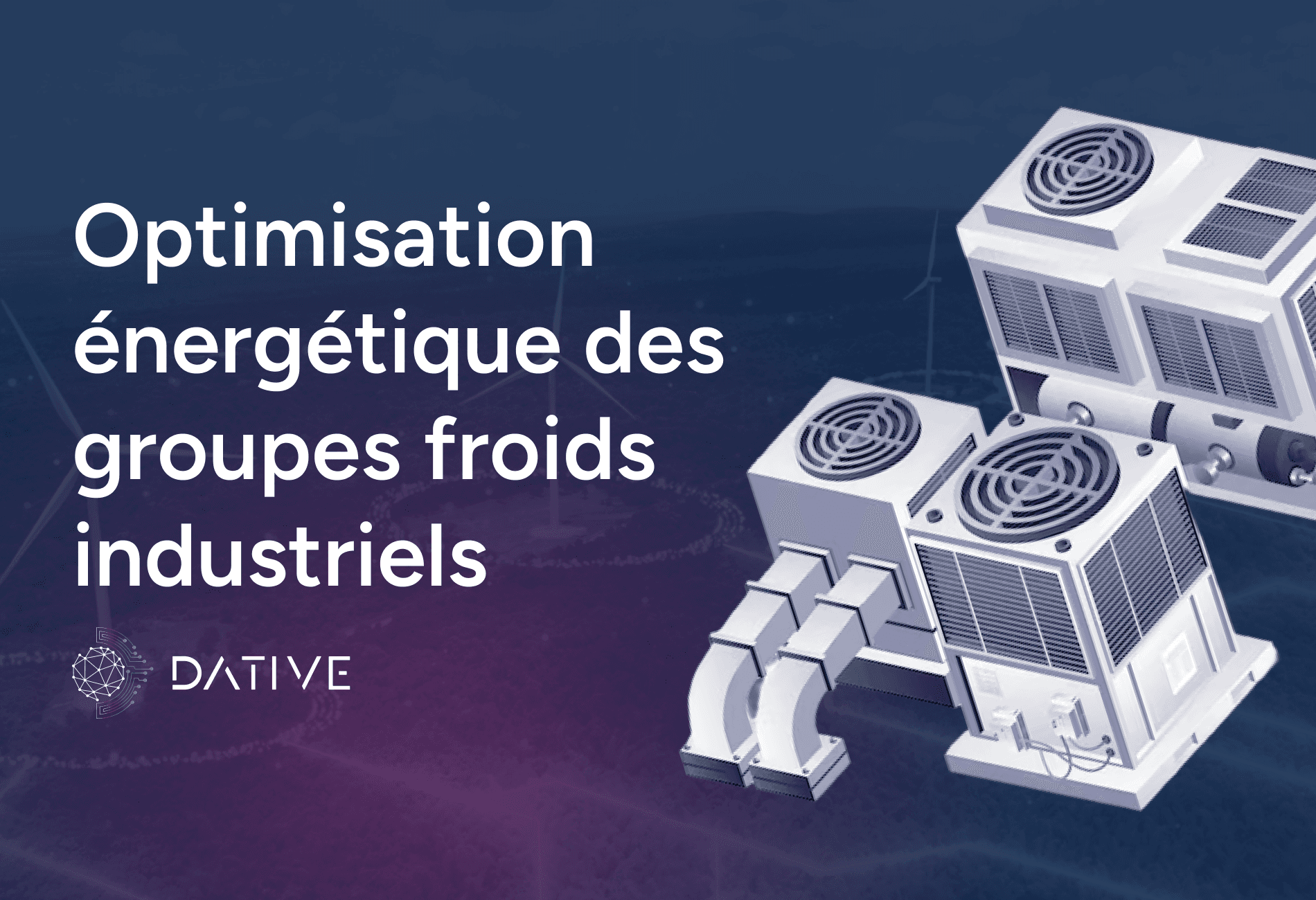
IIoT, Data, and AI: New Drivers for Industrial Energy Efficiency

Quentin
•

Industry facing a triple challenge: costs, decarbonization, competitiveness
Pressure has never been higher on energy managers and industrial directors. Between energy price volatility, decarbonization targets imposed by regulations, and international competition that leaves no room for inefficiency, consumption optimization is no longer optional - it is a strategic imperative.
The good news: digital technology now offers concrete and measurable responses. According to a scientific pre-publication from February 2025, deploying an IoT infrastructure within a plant could achieve a consumption reduction of around 18%. This figure comes from modeling work, but it illustrates the real potential of these technologies when properly integrated.
For industrial operators considering Where to start, everything generally begins with a structuring step: the industrial metering plan. It is impossible to optimize what is not measured; this foundation is what makes it possible to identify energy-intensive areas and prioritize actions with the highest ROI.
Wireless sensors that change the game
For a long time, detailed plant instrumentation was reserved for large sites with substantial budgets. Cabling, installation, maintenance: the cost per measurement point could exceed one thousand euros, making granular data collection economically impractical for most industrial operators.
The advent of wireless IIoT sensors has disrupted this equation. These compact, battery-powered devices, capable of communicating for five to ten years over several kilometers, are now accessible for a few dozen to a hundred euros per unit. They can be deployed at scale, without major works, on any type of industrial site.
Among the technologies that have made this possible, the LoRa network plays a key role: it allows for the creation of secure private networks, covering an entire industrial site with just a few antennas, without depending on a telecommunications operator.
Result: industrial operators finally gain access to a previously unattainable level of measurement granularity. Each machine, each line, each energy flow can be instrumented. And the collected data forms the raw material for truly data-driven energy management.
From raw data to energy intelligence: the key role of IIoT platforms
Collecting data is not enough. It must also be centralized, structured, and made actionable for field teams and management alike. This is precisely what industry players emphasize: the more data collection sources you have, the sounder decision-making becomes. This is the role of energy management platforms like DAT'Power, developed by DATIVE.
DAT'Power allows real-time monitoring of all energies of an industrial site - electricity, gas, water, compressed air, steam, cooling - from a single interface. The platform natively integrates with existing environments: PLCs, meters, SCADA systems, BMS, but also IoT systems and field sensors, thanks to support for numerous standard protocols (Modbus, OPC UA, BACnet, etc.).
In practice, DAT'Power allows users to:
Identify precise sources of waste, at the process, site, or product level
Receive real-time alerts in case of drift or abnormal equipment behavior
Correlate energy consumption and production volumes to calculate the actual manufacturing cost
Directly measure savings resulting from corrective action and calculate the associated ROI
Automatically generate reports required for regulatory compliance (ISO 50001, Décret Tertiaire, Décret BACS)
This integrated approach and strong industrial anchoring distinguish DAT'Power from generalist tools. The solution is designed to adapt to multi-site, multi-brand, and multi-energy environments, and interfaces with IoT systems as well as ERPs or production equipment. For industrial operators wishing to explore the concrete benefits of IIoT for energy management, these capabilities represent a particularly effective entry point.
Discover our complete DAT'Power solution
An ROI of less than one year across more than 20 plants
Field results confirm the potential of these approaches. One of the leading European names in the paper and packaging industry deployed DAT'Power across some twenty of its production plants in France and Europe.
By analyzing data from more than 500 meters, sensors, and transmitters, the platform allowed this operator to implement energy savings actions with a return on investment of less than one year. A result that illustrates what well-utilized data can deliver in a demanding production environment. To see other examples of successful deployments, the case study on the Ninkasi production site or the project conducted on a high-threshold SEVESO site illustrate the capability of DAT'Power to adapt to the most demanding environments.
Would you like to achieve the same level of visibility over your consumption? Request a demonstration of DAT'Power
AI, a new lever for industrial energy efficiency
While IIoT and data form the baseline of energy efficiency, artificial intelligence is now expanding their impact. AI introduces two new capabilities that are particularly valuable for industrial operators.
Automatic anomaly detection. Algorithms trained on process data are capable of identifying subtle drifts long before they translate into extra costs or incidents. This proactive detection significantly reduces response times for teams. This is notably enabled by solutions like DAT'Process, which goes beyond energy monitoring alone by integrating production process optimization capabilities.
Drift prediction. Machine learning models, developed over several years based on actual industrial data, now make it possible to anticipate the evolution of an energy process. Moving from reactive to predictive management represents a paradigm shift, paving the way for what is already referred to as industrial maintenance driven by field data.
Toward interoperability: the Margo initiative
For the IIoT ecosystem to deliver on all its promises, equipment, applications, and orchestration systems must be able to communicate with each other, regardless of the manufacturer. This is the ambition of the Margo initiative, launched in April 2024 at the Hannover Messe by six major industry players - ABB, Capgemini, Microsoft, Rockwell Automation, Schneider Electric, and Siemens - and joined since by many others.
Margo aims to develop an open standard ensuring the interoperability of solutions operating at the edge of industrial IoT ecosystems - the key level where facility data is transformed into actionable information. The release of a Preview Release 1 was announced last January, a concrete sign of accelerating momentum.
For industrial operators, this standardization is excellent news: it will allow faster and wider deployment of IIoT solutions, without dependency on a proprietary ecosystem. This is an issue that DATIVE follows closely, as an actor committed to the digital transformation of connected industry.
What this means concretely for your plant
Combining IIoT, data, and AI within a production environment is no longer an R&D project reserved for large groups. It is an accessible, gradual approach, with an ROI that is measurable within the first weeks.
The key lies in choosing a platform capable of adapting to your physical reality: your existing equipment, your protocols, your energy goals, and your operational constraints. DAT'Power was designed precisely for this: to support industrial companies through every stage of their transformation, from the initial audit to continuous optimization, including sensor deployment and data structuring.
Do you have an energy optimization project? Let's discuss it with our team
Conclusion
Industrial energy efficiency is entering a new era. Wireless IIoT sensors have made data collection accessible and granular. Energy management platforms like DAT'Power allow this data to be transformed into decisions and measurable savings. And AI now opens the way to predictive and autonomous process management.
Industrial businesses that successfully combine these three building blocks - IIoT, data, AI - will be the best equipped to reduce costs, meet their decarbonization commitments, and strengthen their competitiveness over the long term.
Ready to transform your data into energy savings?