Industrial compressed air optimization: a comprehensive guide

Quentin Schroter
•
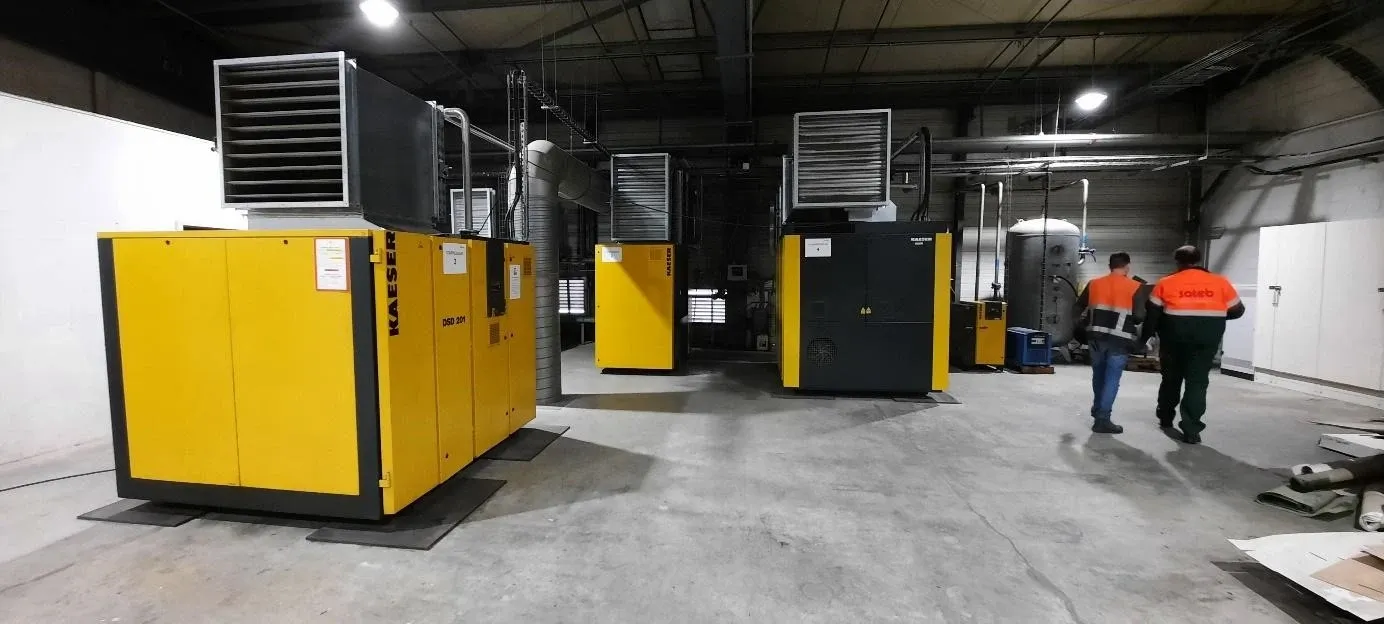
Compressed air is an essential utility for many industrial operators. Used in a variety of applications ranging from pneumatic tools to production line automation, it is often referred to as the "fourth utility," after electricity, gas, and water. However, its operation is highly energy-intensive: according to the French Agency for Ecological Transition (ADEME), compressed air can account for up to 10% of the electricity consumption of an average industrial site. In certain sectors, this proportion can even reach 30%. Consequently, optimizing energy consumption related to compressed air constitutes a major lever for improving overall performance and reducing operating costs. In this article, we will cover the challenges associated with compressed air, the key indicators to monitor, and solutions to improve its energy efficiency.
What is compressed air used for in industry?
Compressed air is used in a multitude of industrial processes. It powers equipment and tools essential to the proper functioning of production lines. Its main applications include:
Pneumatic tools: used for screwdriving, drilling, sanding, or grinding, particularly in the automotive or metalworking sectors.
Process automation: cylinders, actuators, and conveying systems often use compressed air for its speed and reliability.
Cleaning and blowing: commonly used to remove dust or residues from parts or production lines.
Pneumatic transport: in the food processing or chemical industries, it allows the transport of powders or granules without mechanical contact.
Control and regulation: certain measurement or safety systems use compressed air as an acting medium.
Versatile, clean, and easily stored, compressed air is therefore a strategic industrial utility, often indispensable to the smooth running of operations.
Why optimize your compressed air installation?
Although compressed air is a useful and flexible resource, it is also one of the most expensive energy vectors to produce. Optimizing its installation offers several major benefits:
Reduction in energy costs: generating compressed air is energy-intensive. An incorrectly sized or poorly maintained system can generate significant excess consumption.
Improved reliability: an optimized installation experiences fewer pressure fluctuations or breakdowns, ensuring continuity of service.
Extended equipment life: reducing unnecessary stress on compressors and the network helps limit premature wear.
Reduction of the environmental footprint: consuming less electricity also means reducing the associated CO₂ emissions.
Regulatory compliance and access to aid: certain optimization initiatives can be supported by schemes such as Energy Savings Certificates (CEE).
Optimizing a compressed air system is therefore not only a technical issue, but also a strategic lever to improve the competitiveness and sustainability of the company.
Indicators to monitor for compressed air optimization in industry
To control consumption related to compressed air, it is crucial to monitor relevant indicators, such as:
Compressor efficiency: this indicator measures the efficiency of converting electrical energy into pneumatic energy. Low efficiency indicates significant internal losses (heating, friction, mechanical losses) within the compressor itself.
Leakage rate: expressed as a percentage of the air produced, this indicator evaluates losses due to leaks in the distribution network.
Average network pressure: excessively high pressure leads to overconsumption of energy and increases the risk of leaks. Optimal pressure must be maintained based on the actual requirements of the applications.
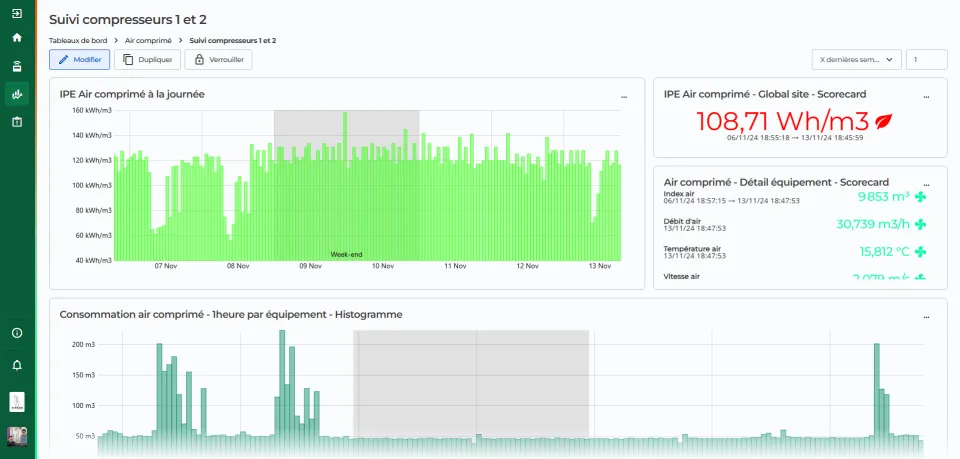
Specific energy consumption (kWh/Nm3): this indicator measures the amount of energy required to produce one normal cubic meter of compressed air. Regular monitoring makes it possible to identify drifts and take rapid action.
Contact us to optimize your compressed air system
How to obtain these indicators for compressed air optimization in industry?
To collect the data needed to improve these indicators, several measurement instruments must be installed:
Flow meters: They allow real-time monitoring of the volume of compressed air consumed and help detect abnormal variations.
Pressure sensors: They measure pressure at various points in the network to optimize its settings and identify overpressure zones.
Energy consumption analyzers: They measure the energy consumed by compressors and other system equipment, helping to identify the most energy-intensive units as well as potential anomalies or malfunctions.
Supervision software: By centralizing and analyzing the collected data, these tools offer a comprehensive view and help identify areas for improvement, as is the case with the DAT’Power solution offered by DATIVE.
Energy audits and periodic diagnostics: They provide an in-depth analysis of the installation, identify energy losses, and propose concrete improvement actions. Performed regularly, they ensure performance monitoring and allow adjustments according to evolving requirements.
Contact us to optimize your compressed air system
How to optimize your compressed air system?
Several actions can be implemented to improve the energy efficiency of compressors:
Heat recovery: compressors generate a large amount of heat during operation. This heat can be recovered and reused to heat premises or industrial fluids, thereby reducing external energy requirements.
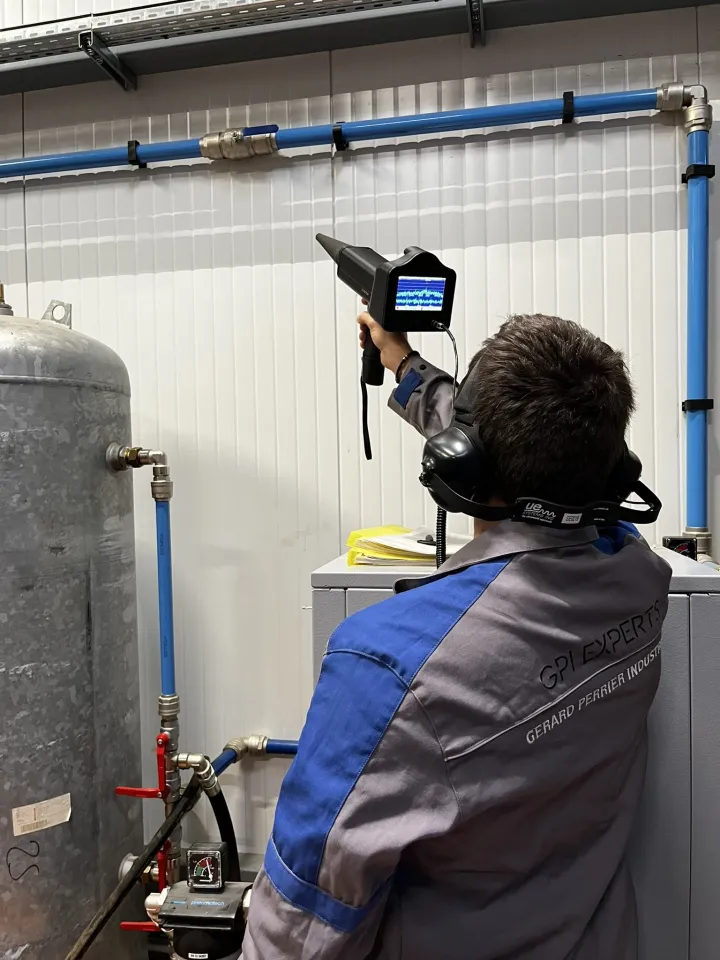
Reduction of leak rate: regular inspection of the network and rapid repair of identified leaks help limit compressed air losses and improve overall efficiency.
Adjusting pressure setpoints: adjusting the pressure to the optimal value for each application reduces energy overconsumption and decreases stress on equipment.
Compressor technology: utilizing variable speed compressors allows air production to adapt to actual demand, reducing unnecessary consumption compared to fixed-speed models while improving overall system efficiency.
Modification of the air network: adapting the network by adding booster compressors or segmenting the circuits optimizes supply according to actual needs. For example, isolating certain areas of the network during off-peak periods (weekends, nights) or using a dedicated compressor for a specific line limits losses and unnecessary consumption throughout the system.
Predictive and proactive maintenance: by monitoring the condition of compressors and associated equipment, it is possible to prevent malfunctions and maintain an optimal level of performance.
Conclusion
Compressed air is an indispensable energy vector, yet it is often underestimated in the analysis of the overall energy performance of an industrial site. Its invisible cost, frequently buried in the electricity bill, conceals significant optimization potential. By monitoring relevant indicators, intelligently instrumenting the installation, and implementing targeted actions, it is possible to significantly reduce energy consumption associated with compressed air, while ensuring the reliability of industrial processes.
Optimizing the compressed air system is therefore part of a broader energy transition approach, supporting the competitiveness and sustainability of industrial enterprises.