Industrial metering plan: the first structuring step toward energy performance

Quentin Schroter
•

In industry, optimizing what you cannot measure is impossible. Faced with lasting increases in energy costs, regulatory requirements, and industrial performance goals, all industrial operators must now manage their energy consumption, whether for financial, environmental, or strategic reasons.
The energy metering plan is the first concrete step in an industrial energy performance process. It enables the identification of energy-intensive equipment, determines the types of meters/sensors to install and their placement within your production site, and prioritizes optimization actions using a methodical and pragmatic approach.
At DATIVE, we assist industrial operators in establishing their metering plan at a controlled cost, in the range of a few thousand euros per building (depending on size, equipment types, etc.). This accessible investment provides a clear, rapid view of energy uses and prepares the subsequent stages systematically.
Request a quote for your energy metering plan
What is an energy metering plan in an industrial environment?
An industrial metering plan consists of mapping the energy flows of your buildings, utilities, and processes in order to identify the truly useful measurement points.
Unlike a purely theoretical or exhaustive approach, the objective is not to measure everything, but to measure what allows you to make decisions and act concretely on your energy consumption.
Concretely, a metering plan includes:
Analysis of energy flows by building, zone, or workshop,
Identification of structuring uses (electricity, gas, steam, compressed air, water, cooling, etc.),
Prioritization of measurement points,
Instrumentation recommendations adapted to field constraints,
A clear schematic diagram of sensors, meters, and networks.
This document serves as the roadmap for the future energy monitoring of your industrial site.
Your essential starting point to qualify for the CEE premium (IND-UT-134)
To be eligible for the IND-UT-134 specification sheet, your project must be supported by a formalized metering plan identifying Significant Energy Uses (UES), defining the relevant measurement points, the acquisition architecture (meters, sensors, gateways), and the Energy Performance Indicators (IPE) to be calculated. The specification sheet notably requires:
A preliminary study carried out by a professional (metering plan complying with the NF EN 17267 standard + IPE + operating procedures), which our teams carry out for you while ensuring compliance with standards,
The acquisition of dedicated measurement and data logging equipment, combined with the calculation of IPE correlating consumption and production, which we provide through our DATu2019Power solution,
Concretely, without a metering plan, it is difficult to demonstrate that your instrumented points adequately cover your UES and that your IPE will be reliable and actionable: your CEE application runs the risk of being rejected or undervalued. Conversely, establishing a solid plan facilitates the implementation of an energy management solution (such as DATu2019Power) complying with the criteria of the specification sheet (standardized acquisition, IPE, alerts, dashboards), and secures the certification value.
I wish to apply for the CEE premium
A limited investment to structure your energy decisions
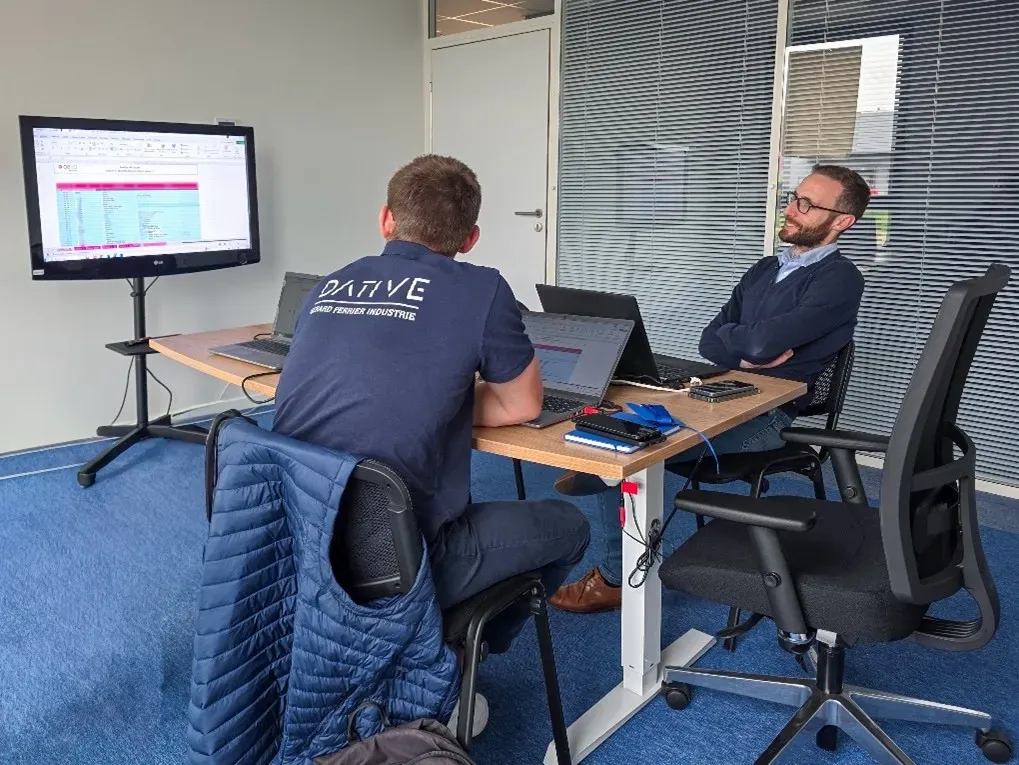
With a controlled budget, the metering plan represents one of the most accessible levers to initiate an energy optimization process and, importantly, enables access to CEE funding, thereby increasing the ROI of the solution.
It specifically helps to:
Structure and secure the reliability of your energy data
Identify your priority saving potentials
Quantify your future projects on factual bases
Prepare your upcoming energy budgets (notably 2026-2027)
Accelerate your decarbonization and energy sobriety initiatives
In the majority of cases, energy optimization or monitoring projects show an ROI of between 1 and 5 years, depending on the uses and the maturity of the site.
The metering plan serves to secure these investments, preventing arbitrary or oversized installations.
Be contacted by our energy specialists
An approach adapted to all levels of industrial maturity
In the field, situations vary widely:
The metering plan aligns all stakeholders in maintenance, production, energy management, industrial operations, and finance, around a common and progressive framework:
Analysis of existing assets
Definition of clear objectives
Prioritization of actions
Development of a realistic multi-year roadmap
The goal is not to challenge existing practices, but to structure and advance them.
From metering plan to energy monitoring with DATu2019Power
Once the metering plan is defined, it becomes possible to deploy an energy monitoring system such as DATu2019Power, the solution developed by our DATIVE teams.
DATu2019Power allows you to:
Automatically collect data from meters and sensors
Track consumption in real time
Detect anomalies and overconsumption
Quantify losses in u20ac/day
Prioritize corrective actions based on their return on investment
You thus transition from a static snapshot of your consumption to a dynamic and factual management of your energy performance, directly linked to your industrial operations.
The metering plan: a small technical step, a major strategic milestone
The energy metering plan is often underestimated. Yet, it constitutes:
The first structuring step of a successful energy optimization process
A decision-making tool for both technical teams and management
A reliable foundation for deploying monitoring and optimization solutions
With a controlled budget, it establishes solid foundations, identifies high-impact areas, and prepares the integration of an energy management system like DATu2019Power systematically.